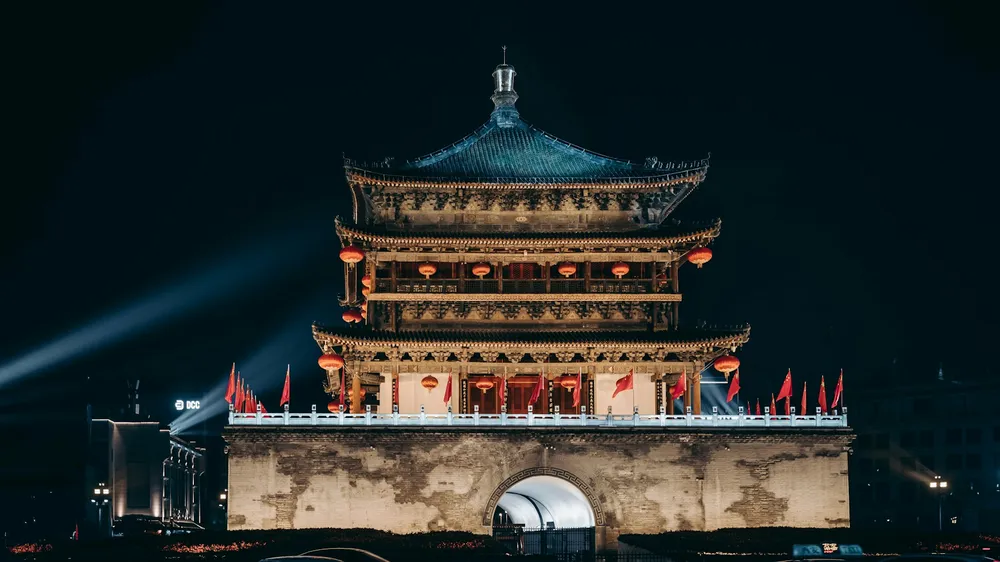
The short version
If you have not booked yet: avoid 1 to 7 October, 1 to 5 May and the week of Chinese New Year. Moving a trip by one week changes everything.
If your trip is already booked, do not panic. Do these six things:
- Book trains the moment sales open, 15 days before each journey.
- Reserve the big sights as soon as their booking windows open. The Forbidden City opens seven days ahead at 20:00 Beijing time.
- Cut a city. Every transfer during a holiday is slower and harder to book.
- Go at opening time to anything famous, and rest in the middle of the day.
- Spend 2 to 5 October in neighborhoods, parks, smaller museums and restaurants, not at headline attractions.
- Book hotels with free cancellation now. Prices rise as the holiday approaches.
Holiday dates in this guide come from the State Council’s official 2026 notice, checked on 30 September 2026.
China’s public holidays: 2026 and early 2027
| Holiday | Official dates in 2026 | Working weekend days | Effect on travelers |
|---|---|---|---|
| New Year’s Day | 1–3 January | 4 January | Small |
| Chinese New Year (Spring Festival) | 15–23 February (9 days) | 14 and 28 February | Very large |
| Qingming Festival | 4–6 April | — | Medium: busy at scenic spots |
| Labour Day (May Day) | 1–5 May | 9 May | Very large |
| Dragon Boat Festival | 19–21 June | — | Medium |
| Mid-Autumn Festival | 25–27 September | — | Medium |
| National Day (Golden Week) | 1–7 October | 20 September and 10 October | Very large |
What is known for 2027:
- Chinese New Year’s Day is Saturday 6 February 2027. The holiday week will fall around that date.
- Labour Day and National Day keep their core dates, 1 to 5 May and 1 to 7 October.
- The official 2027 days off have not been published yet. The State Council usually announces them in October or November. The 2026 notice came out on 4 November 2025. We will update this page when the 2027 notice appears.
Working weekends: to create long holidays, China moves working days to nearby weekends. On those Saturdays or Sundays, offices and schools are open and rush-hour metros are as crowded as on a weekday.
Summer school holidays run through July and August. They are not a public holiday, but family sights, theme parks and trains are busy for the whole period.
What really happens in Golden Week
National Day week is when most Chinese families take their main trip of the year. For visitors, that means:
- Famous sights reach their daily limits. The Forbidden City, the Great Wall at Badaling and Mutianyu, the Terracotta Warriors, the Chengdu Panda Base, West Lake, the Bund and Zhangjiajie are at their busiest. Tickets for the most popular days sell out.
- Trains sell out fast, especially on 30 September, 1 October and 6 to 7 October, when people travel out and back.
- Hotel prices rise, often sharply in tourist cities, and the best-located hotels fill up.
- Queues are long for security checks, cable cars, lifts, toilets and popular restaurants.
- Roads are jammed. Motorways are toll-free for cars during the big holidays, so many families drive. Airport and Great Wall transfers take longer.
- Nothing important is closed. Sights, restaurants, shops and transport all run. Museums that normally close on Mondays generally open on holiday Mondays.
The pattern inside the week: 1 October is a heavy travel day. 2 to 5 October are the most crowded days at sights. Crowds thin on 6 and 7 October as people head home, and from 8 October the country is back at work and sights are calm.
A plan for a trip that is already booked
Two to four weeks before
- Fix your route and stop adding cities. Two bases are easier than four. See how many days you need in each city.
- Book hotels now, with free cancellation, close to a metro station.
- List every booking window. Trains open 15 days ahead. The Forbidden City opens seven days ahead at 20:00. Other sights have their own rules, so check each official site. See Forbidden City tickets, Great Wall tickets, Terracotta Warriors tickets and Chengdu Panda Base.
- Set up Alipay and your train booking account before sales open, with your passport verified. See how to book train tickets in China.
When train sales open
- Be online at the release time for your departure station and buy at once.
- Have a second and third choice: an earlier or later train, another station in the same city, or first class if second class is gone.
- No seats? Keep checking. Tickets come back as people change plans. Consider a flight for long legs, or travel on 3 to 5 October, when fewer people are moving between cities.
- Avoid standing tickets for journeys longer than an hour or two.
During the holiday
- Be at the gate when it opens. The first hour is the calmest of the day.
- See one famous sight a day, and spend the rest of the day somewhere ordinary.
- Eat early or late. Popular restaurants have long waits from 18:00 to 20:00.
- Carry your passport, water and a power bank. Holiday security checks are slower.
- Allow extra time for every transfer. Arrive at big train stations an hour before departure.
- Use the metro, not taxis, in city centers. DiDi drivers are hard to find at peak times near big sights.
Where to be, and where not to be
| Good choices in a holiday week | Hard in a holiday week |
|---|---|
| Big-city neighborhoods: Beijing hutongs, Shanghai’s French Concession | The Forbidden City and Tiananmen Square on 2–5 October |
| Large parks early in the morning | The Great Wall at Badaling |
| Smaller and specialist museums | Zhangjiajie, Huangshan and other mountain parks with cable cars |
| Business districts and modern areas, which are quieter than usual | West Lake in Hangzhou and the Suzhou gardens |
| Less famous Great Wall sections, with a private driver | Hongyadong in Chongqing in the evening |
| Evening food streets away from the main tourist street | The Bund and Nanjing Road at night |
| Your hotel’s own neighborhood, on foot | Ancient towns and water towns |
Hong Kong and Macau are not an escape: both are busy with mainland visitors in the same weeks.
Beijing in Golden Week: the city center is festive and heavily controlled around Tiananmen Square, with extra security checks and long lines. Book the Forbidden City the minute your date opens. If you miss it, Jingshan Park gives the classic view over its roofs, and the Temple of Heaven and Summer Palace are easier to enter.
Mountain parks are the hardest places in a holiday, because cable cars and lifts have fixed capacity. See is Zhangjiajie worth it?
Chinese New Year is different
Chinese New Year, or Spring Festival, is a family holiday. People go home instead of going sightseeing, which changes the picture:
| Topic | What to expect |
|---|---|
| Transport | The Spring Festival travel rush lasts about 40 days around the holiday. Trains before New Year’s Eve and after the holiday week are the hardest to book. |
| Big cities | Beijing, Shanghai, Guangzhou and Shenzhen are quieter than usual in the first days, because many residents leave for their hometowns. |
| Small businesses | Many family restaurants, market stalls and small shops close from New Year’s Eve for several days, some for a week or more. |
| What stays open | Major sights, hotels, malls, chain restaurants, convenience stores, metros, trains and flights. |
| Atmosphere | Red lanterns, temple fairs and lantern festivals. New Year’s Eve itself is a quiet family evening, not a street party. |
| Weather | Cold in the north and center; mild in Guangdong, Yunnan and Hainan. |
| Popular escapes | Hainan, Yunnan and Harbin are in high season, with high prices. |
How to plan a New Year trip:
- Arrive in your first city before New Year’s Eve and stay put for the first three days of the holiday.
- Move between cities in the middle of the holiday week, when trains are easier, not just before or just after it.
- Check opening hours for New Year’s Eve and New Year’s Day. Some museums and sights close or shorten their hours.
- Book restaurants for New Year’s Eve dinner, or plan to eat at your hotel. Many restaurants are closed or fully booked by families.
- Look for a temple fair (庙会) in Beijing or a lantern festival, which you can only see at this time of year.
In 2027, New Year’s Eve is Friday 5 February and New Year’s Day is Saturday 6 February.
The shorter holidays
- May Day (1 to 5 May) feels like a shorter Golden Week: very busy sights, sold-out trains and good weather. Treat it the same way.
- Qingming, Dragon Boat and Mid-Autumn are three-day weekends. Cities stay manageable, but scenic areas, ancient towns and trains on the first and last day are busy. Book those days early and you will be fine.
- New Year’s Day (1 January) has little effect on visitors.
Is there any upside?
Yes, if you plan for it:
- The mood is festive. Flags and flower displays for National Day, lanterns and fairs at Chinese New Year.
- Everything is open in Golden Week, with longer hours at many sights.
- The weather in early October is among the best of the year in most of China.
- Big cities at Chinese New Year have light traffic and short queues at major sights.
If your dates are flexible, the best option is still to travel just after a holiday. The week from 8 October has the same weather and a fraction of the crowds. See the best time to visit China.
We can help with holiday bookings
Holiday trips depend on getting the bookings right on the day they open. Our train ticket booking service and attraction tickets service can handle them for your group, and our free trip planning service can reshape a route around the busiest days.
- The State Council (gov.cn): Notice on the 2026 public holiday arrangements, in Chinese
- China Railway 12306: English FAQ (ticket sales period and Spring Festival travel rush)
- The Palace Museum: official English ticket booking (release seven days ahead, holiday Mondays)
Editorial update: . Check the linked source for current provider terms or official rules.