The short version
Winter is a good time to visit China, not a bad one, if you plan by region.
- Best for: low prices, empty sights, clear northern skies, snow scenery, hot pot and the Harbin ice festival.
- Hardest part: the cold in the north, the damp chill in the east, and short days.
- Avoid: the week of Chinese New Year and the days just before and after it. In 2027, New Year’s Day is Saturday 6 February.
- Easiest month: December.
- Warm options: Hainan, Guangzhou and Shenzhen, southern Yunnan, Hong Kong.
Temperatures in this guide are long-term averages from the World Meteorological Organization’s climate data, not forecasts. Check the forecast a week before you go.
How cold is it? Winter by region
| Region | Daytime in January | What it feels like |
|---|---|---|
| Harbin and the northeast | Far below freezing; nights below −20°C | Extreme cold; short outdoor visits with proper gear |
| Beijing | About 2°C; nights about −9°C | Cold, dry and often sunny; windy days feel much colder |
| Xi’an | About 5°C | Like Beijing, slightly milder |
| Shanghai, Hangzhou, Suzhou | About 8°C | Damp, grey and chilly; feels colder than the number |
| Chengdu and Chongqing | About 10°C | Cloudy and damp; rarely freezing |
| Guilin and Yangshuo | About 12°C | Cool and often misty; low river levels |
| Guangzhou, Shenzhen, Hong Kong | About 18°C | Mild and dry; the most comfortable season there |
| Kunming (Yunnan) | Mild and sunny | Spring-like days, cold nights |
| Hainan (Sanya) | Warm | Beach weather; high season |
The heating line
Northern China has central heating in winter, so hotels, restaurants, museums and trains in Beijing, Xi’an and Harbin are warm inside, sometimes too warm. South of the Yangtze, including Shanghai, Hangzhou, Chengdu and Guilin, many buildings have little or no heating. Rooms rely on air conditioners, and small restaurants may be unheated.
The result surprises visitors: you can feel colder in Shanghai at 6°C than in Beijing at −2°C. Pack indoor layers for the south, and check that your hotel room has heating.
December, January or February?
| Month | Weather | Crowds and prices | Watch for | Verdict |
|---|---|---|---|---|
| December | Cold in the north, not yet at its worst | Very quiet; low hotel prices | Short days; New Year’s Day crowds around 1 January | Best winter month |
| January | The coldest month | Quiet until the New Year travel rush starts | School winter holidays begin; trains fill before Chinese New Year | Best for Harbin |
| February | Still cold, slowly warming | Very busy around Chinese New Year, quiet afterwards | Holiday closures and sold-out trains | Good only after the holiday |
Chinese New Year moves every year. It fell on 17 February in 2026 and falls on 6 February in 2027. The travel rush around it lasts about 40 days. The official 2027 holiday dates are normally announced in October or November 2026. See visiting China during Golden Week or Chinese New Year.
Why winter can be the best time
- No queues. The Forbidden City, the Terracotta Warriors and the Great Wall are at their quietest.
- Lower prices. Hotels and flights are at their cheapest outside the holiday weeks.
- Winter ticket prices. The Forbidden City costs RMB 40 from November to March, down from RMB 60.
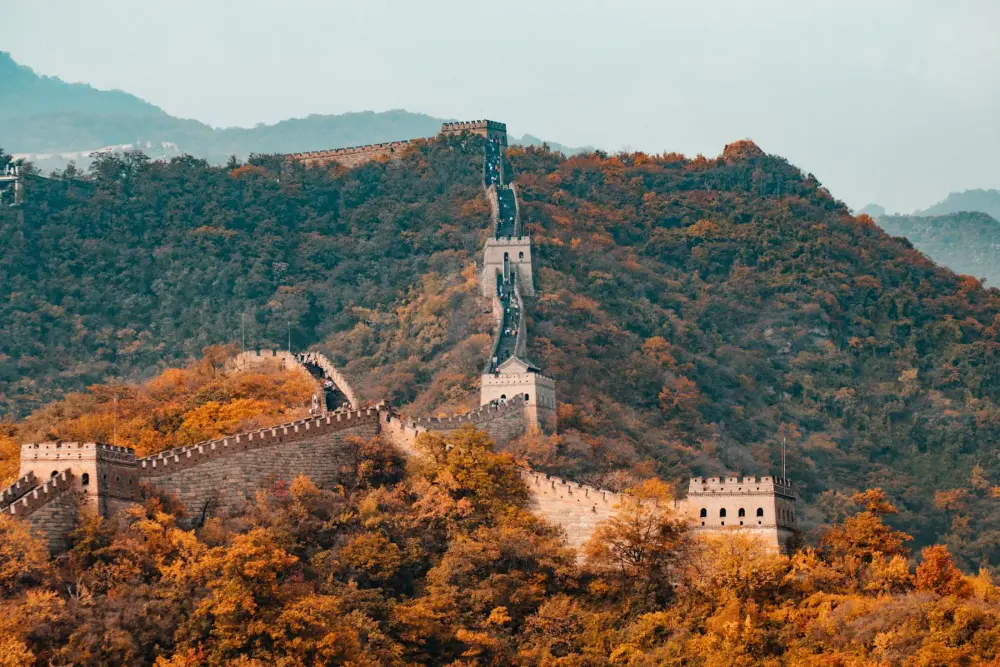
- Clear light in the north. Cold, windy days bring blue skies and long views from the Great Wall.
- Snow scenery, when you are lucky: the Forbidden City’s red walls, the Great Wall and the Yellow Mountains under snow.
- Winter food. Hot pot, lamb, roasted sweet potatoes and chestnuts from street stalls, and candied hawthorn sticks in Beijing.
- Festivals. The Harbin Ice and Snow Festival, and lanterns and temple fairs around Chinese New Year.
The downsides, honestly
- Short days. In December the sun sets around 17:00 in Beijing, and many sights close earlier in winter. The Forbidden City closes at 16:30 and stops admitting visitors about an hour earlier.
- Cold outdoor sights. The Great Wall and the Forbidden City are almost entirely outdoors. Plan half days, with warm breaks.
- Bare landscapes. Gardens, parks and the hills around the Great Wall are brown, not green.
- Grey, damp weather in Shanghai, Chengdu, Chongqing and Guilin.
- Air quality in the north can be poor on still winter days. Check an air quality app if you are sensitive.
- Weather closures in mountain areas: ice can close paths, cable cars and lifts at Zhangjiajie and Huangshan.
- Dry air in the north. Bring lip balm and moisturizer.
Where to go in winter
The classic route still works
Beijing, Xi’an and Shanghai is a good winter trip. Most of what you see in Xi’an and Shanghai is indoors or can be done in short walks, and Beijing’s sights are magnificent without crowds. Travel between them by high-speed train, which is warm and unaffected by most winter weather.
| City | Winter tips |
|---|---|
| Beijing | Visit the Great Wall in the late morning, when it is warmest. Book the Forbidden City for a sunny day. |
| Xi’an | The Terracotta Warriors pits are covered halls. The City Wall is exposed and windy. |
| Shanghai | Museums, the French Concession, food and the skyline. Expect grey skies and damp cold. |
See Forbidden City tickets, Great Wall tickets and Terracotta Warriors tickets.
For snow and ice: Harbin
Harbin, in the far northeast, builds a city of illuminated ice buildings every winter, with a separate park of giant snow sculptures.
- When: the parks usually open in late December and run until around late February. January has the best ice.
- How cold: often below −20°C, and colder at night, when the ice is lit. Dress in thermal layers, a long down coat, insulated boots, a face covering and two pairs of gloves. Phone batteries drain quickly in the cold, so keep your phone inside your coat.
- How long: two nights.
- Getting there: about five hours from Beijing by high-speed train, or a flight of about two hours.
- Book early. January is Harbin’s high season, and hotels fill.
For warmth: the south
| Place | Why go in winter |
|---|---|
| Hainan (Sanya) | Beaches and resorts; the most expensive time of year there |
| Guangzhou and Shenzhen | Mild, dry weather and Cantonese food. See our Guangzhou and Shenzhen pages |
| Hong Kong | Its best season. See adding Hong Kong to a China trip |
| Yunnan | Sunny days in Kunming, Dali and Lijiang, with cold nights; warm in Xishuangbanna |
Places that are harder in winter
| Place | Problem in winter | Still worth it? |
|---|---|---|
| Zhangjiajie | Fog; ice can close paths and cable cars | Only with spare days. See is Zhangjiajie worth it? |
| Huangshan | Icy steps; very cold on the summit | For photographers, with proper gear |
| Guilin and Yangshuo | Misty, cool, low water on the Li River | Yes, quieter and cheap, but less scenic |
| Chengdu and Chongqing | Grey and damp, with hazy views in Chongqing | Yes: pandas are active in cool weather and hot pot suits the season |
| Tibet and high western Sichuan | Extreme cold, snow-blocked roads | Not for a first winter trip |
Winter routes
Ten days, classic: Beijing (4 nights) → Xi’an (2) → Shanghai (3).
Twelve days, with ice: Beijing (4) → Harbin (2) → Xi’an (2) → Shanghai (3).
Twelve days, chasing warmth: Beijing (4) → Xi’an (2) → Guilin and Yangshuo (3) → Guangzhou or Hong Kong (3).
Two weeks, city and sun: Shanghai (3) → Chengdu (3) → Kunming and Dali (4) → Sanya (3).
See how many days you need in each Chinese city and our 10-day itinerary.
What to pack
- For the north: a long down or padded coat, thermal base layers, hat, scarf, gloves and warm shoes with grip. Wear layers you can take off indoors, where it is very warm.
- For the east and Chengdu: a padded jacket, sweaters and thermal layers for indoors as well as outdoors.
- For the south: long sleeves and a light jacket. Summer clothes and swimwear for Hainan.
- For everyone: lip balm, moisturizer, a 3C-marked power bank (cold drains batteries) and hand warmers, which are sold cheaply in Chinese convenience stores and online.
A trip that covers both Beijing and Guangzhou needs clothes for a 20°C range. Layers beat one heavy coat. See what to wear in China for month-by-month packing lists.
Practical winter tips
- Start later and finish earlier. Plan outdoor sights between 10:00 and 15:00.
- Book the Great Wall for the clearest day and keep it flexible. A private driver lets you leave when you are cold. See our private driver service.
- Check winter opening hours. Many sights close 30 to 60 minutes earlier from November to March.
- Carry a bottle for hot water. It is free on trains, in stations and in most restaurants.
- Watch for flight delays in snow and fog, and prefer trains in the north and east.
- Book trains early in January and February. Tickets open 15 days ahead, and the New Year rush fills them. See how to book train tickets in China.
- Traveling with children or older relatives? Shorten outdoor time and choose heated hotels. See China with kids.
- Buy travel insurance that covers winter activities if you plan to ski or skate. See travel insurance for China.
Group tours in late December
Winter departures are often the cheapest of the year. Before you book one, check that the plan allows for the cold: late starts, indoor options on the coldest days, heated vehicles and hotels, and no long outdoor stops at dawn. See do I need a tour guide in China?
Our free trip planning service can build a winter route around your dates, with the right mix of indoor and outdoor days and hotels that are properly heated.
- World Meteorological Organization, World Weather Information Service: Beijing climate normals (China Meteorological Administration data)
- WMO World Weather Information Service: Shanghai climate normals
- WMO World Weather Information Service: Guangzhou climate normals
- The State Council (gov.cn): Notice on the 2026 public holiday arrangements, in Chinese
- The Palace Museum: official English ticket booking (winter prices and hours)
Editorial update: . Check the linked source for current provider terms or official rules.